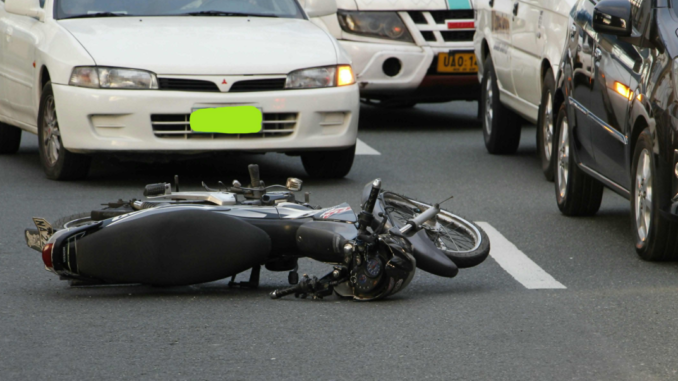
Motorcycle Accident Claims, Why You Need a Specialized Injury Attorney
For those who ride, a motorcycle is more than just a mode of transportation; it is a symbol of freedom and a distinct way of life. However, that freedom comes with a disproportionate level of risk. According to the National Highway Traffic Safety Administration (NHTSA), motorcyclists are significantly more likely to be injured or killed in a collision than occupants of passenger cars.
When a crash occurs, the aftermath is rarely a simple “fender bender.” Because riders lack the structural protection of a steel frame, airbags, and seatbelts, the resulting injuries are often catastrophic—ranging from “road rash” and complex fractures to traumatic brain injuries (TBI) and spinal paralysis.
In the legal arena, motorcycle accident claims are fundamentally different from standard car accident cases. Motorcyclists face a unique set of challenges: deep-seated social biases, complex physics, and aggressive insurance tactics designed to shift blame onto the rider. To secure justice, you cannot rely on a general practice lawyer. You need a specialized motorcycle injury attorney.
This comprehensive guide explores the specific hurdles of motorcycle litigation and explains exactly why specialized legal representation is the only way to secure the maximum compensation you deserve.
Section 1: The “Biker Bias” – A Silent Threat to Your Claim
One of the most significant obstacles in motorcycle accident claims isn’t found in the law books—it’s found in the minds of the public and insurance adjusters. This is known as “Biker Bias.”
Many people, including potential jurors, subconsciously view motorcyclists as inherently reckless, speed-seeking daredevils. When an accident occurs, the default assumption is often that the biker must have been speeding, lane-splitting, or weaving through traffic.
How Insurance Companies Exploit Bias
Insurance adjusters are well aware of this prejudice. They will use it to devalue your claim by:
-
Assigning Unfair Fault: Using the “Comparative Negligence” rule to argue that you were partially responsible for the crash, even if the other driver turned left directly into your path.
-
Devaluing Pain and Suffering: Suggesting that you “assumed the risk” of injury by choosing to ride a motorcycle.
A specialized motorcycle attorney knows how to dismantle these stereotypes. They present you not as a “daredevil,” but as a responsible operator who follows the rules of the road. They use data, witness testimony, and safety records to flip the narrative and place the focus back on the negligent driver.
Section 2: Proving Liability – The Complexity of Two-Wheeled Physics
Proving who was at fault in a motorcycle crash is significantly more technical than in a car-on-car collision. Motorcycles react differently to road hazards, braking, and evasive maneuvers.
1. Left-Turn Collisions
The most common motorcycle accident occurs when a passenger vehicle turns left in front of a motorcycle at an intersection. Drivers often claim they “didn’t see” the biker. A specialized attorney will use Human Factors Experts to explain “inattentional blindness”—proving that the driver’s failure to see you was a breach of their duty of care, not a fault of your visibility.
2. Road Hazard Liability
A minor pothole, loose gravel, or an uneven bridge joint that a car would drive over without noticing can be a death sentence for a motorcyclist. If your accident was caused by poor road maintenance, your attorney must navigate the complex world of Sovereign Immunity to sue a city or state government. These cases have incredibly short deadlines and strict filing requirements.
3. Accident Reconstruction
Specialized attorneys work with engineers who understand motorcycle-specific dynamics. They analyze tire marks, the resting position of the bike, and the “slide distance” to prove the speed and trajectory of both vehicles. This scientific approach is often the only way to prove a rider was not speeding.
Section 3: The High Stakes of Catastrophic Injuries
Because motorcycles offer no exterior protection, the injuries in these claims are frequently life-altering. This increases the “value” of the claim, but it also increases the ferocity with which the insurance company will fight.
Calculating the “True” Cost of Recovery
A general injury lawyer might look at your current hospital bills and add a small percentage for “pain and suffering.” A specialized motorcycle attorney looks at the long-term reality:
-
Future Medical Care: Will you need skin grafts for severe road rash? Will you require multiple surgeries for “biker’s arm” (nerve damage)?
-
Prosthetics and Mobility Aids: In cases of limb loss or paralysis, the cost of equipment over a lifetime can reach millions.
-
Vocational Rehabilitation: If your injuries prevent you from returning to your trade, your attorney will fight for “lost earning capacity”—the total sum of what you would have earned until retirement.
Section 4: Dealing with “No-Contact” Accidents
Many motorcycle accidents are “no-contact” crashes. This happens when a driver’s negligence (like cutting you off) forces you to “lay the bike down” or swerve into a ditch to avoid a more violent collision.
In these cases, the negligent driver often keeps driving, unaware (or pretending to be unaware) of the chaos they caused. Insurance companies are notoriously difficult regarding “phantom vehicle” claims. A specialized attorney knows how to use Uninsured Motorist (UM) coverage and gather circumstantial evidence (like nearby doorbell cameras or paint transfer) to prove the other driver’s liability even without physical contact between the vehicles.
Section 5: Why General Personal Injury Lawyers Often Fail Riders
Many lawyers claim to handle motorcycle cases, but they treat them like “small cars.” This is a mistake that leads to undervalued settlements.
-
Lack of Riding Knowledge: If your lawyer doesn’t know the difference between a “high-side” and a “low-side” crash, they cannot effectively explain the accident to a jury.
-
Failure to Audit Gear Costs: Specialized riding gear (helmets, Kevlar-reinforced jackets, armored boots) is expensive. A specialized attorney ensures that the replacement cost of your high-end safety gear is included in the Property Damage portion of your claim.
-
Inadequate Expert Networks: Biker-focused firms have established relationships with neurologists who specialize in “closed-head” injuries (concussions that occur even when a helmet is worn) and orthopedic surgeons who specialize in motorcycle-specific fractures.
Section 6: Steps to Take After a Motorcycle Accident
While your attorney will handle the legal battle, your actions at the scene are critical to the success of your claim:
-
Never Admit Fault: Even a simple “I’m sorry” can be used by the insurance company as an admission of liability.
-
Call the Police: Ensure a formal report is filed. In many jurisdictions, the police report is the only way to document the scene before the vehicles are moved.
-
Photograph Everything: Take photos of your bike, the other vehicle, the road conditions, and your gear. The damage to your helmet can be a powerful piece of evidence proving the force of the impact.
-
Preserve Your Gear: Do not throw away your damaged helmet or torn leathers. They are physical evidence of the trauma your body endured.
-
Seek Specialized Medical Care: Go to an ER or trauma center immediately. Some internal injuries or “slow-bleed” brain traumas common in motorcycle accidents don’t show symptoms for hours or days.
Section 7: The “No-Win, No-Fee” Guarantee
The financial burden of a motorcycle accident is staggering. Between bike repairs and medical bills, the last thing you need is a legal bill.
Most specialized motorcycle injury attorneys operate on a contingency fee basis.
-
Zero Upfront Costs: You pay nothing to start your case.
-
The Firm Advances Costs: Your lawyer pays for the accident reconstruction experts, the medical investigators, and the court filing fees.
-
Payment is Tied to Success: The attorney only gets paid a percentage of the final settlement. If they don’t win your case, you owe them nothing for their time or the expenses they incurred.
Section 8: Maximizing Your Settlement in 2026
In 2026, insurance companies are using more advanced AI to devalue claims. A specialized attorney counters this with:
-
Digital Evidence: Utilizing GPS data from your bike or wearable tech to prove you were traveling at a safe speed.
-
Impact Narratives: Creating “Day in the Life” videos to show a jury the grueling reality of your recovery.
-
Aggressive Negotiation: Refusing “nuisance settlements” and preparing every case as if it is going to a full jury trial.
Conclusion
A motorcycle accident is a life-altering event that requires more than just a lawyer—it requires an advocate who understands the unique culture, physics, and prejudices faced by the riding community. Motorcycle accident claims are high-stakes battles against insurance companies that are counting on “biker bias” to save them money.
By hiring a specialized motorcycle injury attorney, you level the playing field. You secure an advocate who can explain the nuances of your crash, quantify the true cost of your injuries, and fight relentlessly to ensure that your rights as a rider are protected. Do not let a driver’s negligence or an insurance company’s prejudice dictate your future. Take the first step toward justice and secure the specialized representation you need to get back on the road.
Frequently Asked Questions (FAQs)
What if I wasn’t wearing a helmet? In many states, you can still recover compensation even if you weren’t wearing a helmet. However, the insurance company will try to use the “Comparative Negligence” rule to argue that your injuries were worse because of your choice. A specialized attorney can often argue that the lack of a helmet had no bearing on the cause of the accident itself.
How long does a motorcycle accident claim take? Because injuries are often severe, these cases can take longer than car accidents. It is vital to wait until you have reached Maximum Medical Improvement (MMI) before settling. This ensures all future medical costs are accounted for. Generally, a case can take anywhere from 8 months to 2 years.
Can I sue for a “near-miss” that caused me to crash? Yes. These are called “no-contact” accidents. If a driver’s negligent action (like an illegal lane change) forced you to crash to avoid them, they are still liable for your damages. These cases are harder to prove, making a specialized attorney even more essential.
Will my case have to go to court? The vast majority of motorcycle claims (over 90%) are settled out of court. However, the best way to get a high settlement is to hire an attorney who is known for going to trial. When the insurance company knows your lawyer isn’t afraid of a jury, they offer much higher settlement amounts.
Leave a Reply